


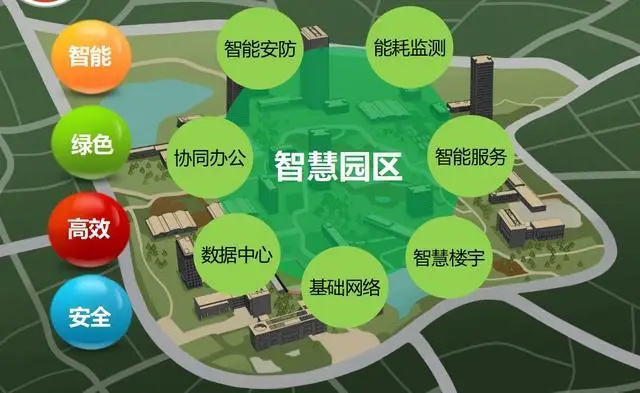
Buildings account for nearly 39% of global energy-related carbon emissions, making them a prime target for decarbonization efforts. Today, building owners face a host of daunting challenges: rising energy costs, increasingly stringent environmental regulations, and growing tenant demand for healthier spaces. While the goals of improving efficiency and achieving sustainability are clear, the path to achieving them can be complex. The solution lies in shifting from traditional passive management to data-driven automation, adopting an integrated Internet of Things (IoT) strategy.
Practical Strategies for Building Optimization
IoT smart building solutions have a threefold goal: improving the efficiency and resilience of the building itself, reducing its impact on the planet, and enhancing the health and well-being of the people inside.
The Building: Improving Operational Efficiency and Extending Service Life
A smart building's first priority is to be a well-run, long-lasting asset. IoT solutions help protect buildings from damage and run their core systems at peak efficiency, directly reducing operating and capital expenditures.
Predictive Maintenance for HVAC
HVAC performance can degrade due to issues such as insufficient refrigerant, duct leaks, or component failures. Implement a multi-layered monitoring strategy to gain a complete picture of HVAC system health. Use smart thermostats as the primary data source for temperature setpoints and system operating status, and compare them with actual ambient temperature data measured by temperature sensors. In addition, use duct temperature sensors to measure supply airflow and current sensors to monitor equipment power consumption for further diagnostics. By analyzing these data streams together, you can spot underperforming equipment long before it fails.
Asset Protection
Smart current transformers in electrical circuits can detect overcurrent (caused by surges or aging equipment) and undercurrent (caused by wiring faults), preventing equipment damage and fire risks. Install pipe pressure sensors to monitor fluctuations that may signal potential leaks or blockages, addressing problems before they occur. Ambient humidity sensors can trigger ventilation systems to prevent long-term structural damage from mold. In addition, water leak sensors linked to automatic shut-off valves in high-risk areas can respond immediately and stop leaks quickly.
Space Optimization
In office and commercial buildings, underutilized space is wasteful, while overcrowded areas frustrate employees and visitors. Deploy occupancy or people-counting sensors to collect anonymous data on space utilization patterns. An analytics platform can generate heat maps and reports showing which spaces are most popular, which are underutilized, and which times of day see the most use. These actionable insights allow you to optimize floor plans, reassign space to high-demand uses, and make informed, data-driven decisions about future real estate needs. It also improves operational efficiency, for example by adjusting cleaning schedules to focus on high-traffic areas.
For the Planet: Energy Optimization to Achieve Environmental, Social and Governance (ESG) Goals
As governments around the world enforce strict energy regulations, IoT provides buildings with a practical way to become active participants in the decarbonization process.
The largest energy-consuming equipment in buildings, such as HVAC and lighting systems, typically runs on fixed schedules, wasting large amounts of electricity on vacant or partially occupied spaces. Through a network of environmental and occupancy sensors, real-time temperature, humidity, and occupancy data can be sent to the building management system (BMS). For example, an automation rule can be set: “If a meeting room is vacant for 5 minutes, turn off the lights and instruct the HVAC system to enter energy-saving mode.” This demand-based control ensures energy is consumed only where and when it is needed, significantly and immediately reducing utility costs.
Without knowing exactly which systems consume the most electricity, energy efficiency efforts can be unfocused and ineffective. Installing non-intrusive smart current transformers on main circuits lets you track and visualize energy consumption over time. This data clearly shows where your energy spending goes, enabling you to prioritize upgrade projects and achieve clear, predictable returns on investment. By tracking energy use per circuit and per device, facility managers can identify high-consumption areas and inefficiencies, enabling targeted strategies to reduce the building's overall energy consumption.
People First: Creating a Healthy, Safe and Productive Environment
A building's primary mission is to serve its occupants. IoT solutions deliver an exceptional human-centric experience by making spaces respond better to people's needs.
Poor air quality——especially high CO2 concentrations——has been proven to cause drowsiness and reduce cognitive function and productivity. Installing indoor air quality sensors in densely occupied areas such as meeting rooms, classrooms, and open-plan offices enables continuous monitoring of CO2, volatile organic compounds (VOCs), and other pollutant levels. Integrating this data with the ventilation system enables demand-controlled ventilation. For example, when CO2 levels exceed a preset health threshold, the sensors automatically signal the building management system (BMS) to increase fresh air supply to that specific area. This ensures optimal comfort while avoiding energy waste from over-ventilation.
Buildings have hygiene and safety blind spots that negatively affect occupant experience and pose significant risks. Dedicated sensors can detect odors and harmful gases (such as ammonia), signaling the need for cleaning and sending on-demand alerts to cleaning staff. In no-smoking zones, smoke and vapor detection sensors can send discreet alerts to management when violations occur. For safety, especially in venues such as hospitals or nursing homes, privacy-preserving sensors can detect falls or prolonged inactivity and immediately alert responders, dramatically shortening intervention times.
Why LoRaWAN® Is the Ideal Choice for Sustainable Buildings
Truly sustainable smart building solutions depend on collecting reliable data from every corner of the facility——often from hard-to-reach places. LoRaWAN® (Long Range Wide Area Network) has become the ideal connectivity solution for such environments. Its low-power design lets sensors run for years on a single battery, dramatically reducing e-waste and maintenance costs. Long-range signals can penetrate dense materials such as concrete and steel, ensuring seamless connectivity in large, complex buildings while minimizing infrastructure investment. LoRaWAN® supports low-impact wireless deployment, avoiding the disruptive, costly, carbon-intensive work of laying new cabling——making it ideal for retrofitting existing buildings. In addition, its ability to connect thousands of devices to a single gateway makes the system highly scalable, allowing buildings to adapt and grow over time without a complete overhaul.
The Road Ahead
Transforming a building into a smart, sustainable asset is an achievable process. Even the oldest, least efficient buildings can be retrofitted to meet modern standards——and this does not necessarily require a complete renovation. You can start with targeted pilot projects, such as automating the lighting on a single floor or monitoring the energy use of one critical system. Wireless technologies such as LoRaWAN make these first steps fast, cost-effective, and non-disruptive. By focusing on proven approaches to solve specific problems, you can build a clear business case and scale up gradually to create a truly future-proof building.
As the technology matures, IoT solutions are becoming standard for all high-performance buildings. For building owners seeking to cut costs, meet sustainability requirements, and deliver the superior environments that tenants and employees expect, this is the most practical and effective approach.
Copyright © 2023-2025 APAC Cable (Guangzhou) Co., Ltd. All Rights Reserved 粤ICP备2025482347号-1
Address: No.361, Xintang Avenue West, Xintang Town, Zengcheng District, Guangzhou, China







 粤公网安备44011802001235号