


As AI applications continue to evolve toward large-scale training, distributed inference, and cross-region collaborative computing, Data Center Interconnect (DCI) is entering a new cycle of architecture upgrades. Compared with the traditional cloud computing era, AI workloads place higher demands on networks in terms of bandwidth, latency, transmission stability, and resource utilization efficiency, causing optical networks to evolve from a single technology approach toward the synergistic development of multiple architectures.
Future AI optical network construction will focus more on adaptability to different scenarios rather than relying on a single unified architecture. Operators, cloud service providers, and builders of large computing infrastructure will choose different optical transmission solutions based on network scale, fiber resources, energy control, construction cycle, and business needs, achieving the best balance between performance and cost.
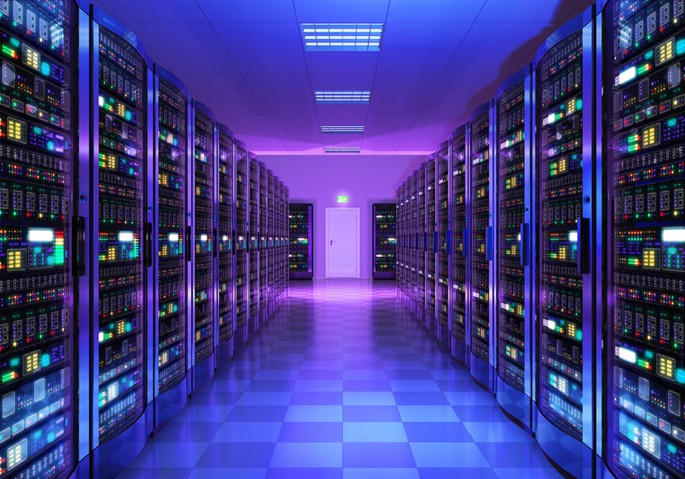
AI pushing data center interconnect into the ultra-large-capacity era
In recent years, the parameter scale of AI models has continued to grow, training tasks have begun to run collaboratively across multiple data centers, and data exchange volumes have grown exponentially. Traditional DCI mainly handles data backup, cloud service synchronization, and inter-region traffic scheduling, while data center interconnect in the AI era must support high-speed exchange of massive model parameters, training data, and inference results.
In large-scale cross-data-center AI networks, transmission capacity is orders of magnitude higher than traditional metro data center interconnect, placing higher demands on network reliability. Especially during distributed training, any degradation in link performance can affect overall computing efficiency. Networks therefore need not only ultra-high throughput, but also stable, low-packet-loss, high-availability operation.
Meanwhile, AI workloads are expanding from a single campus to cross-campus, cross-city, and even cross-region deployments, continuously broadening the coverage of data center interconnect from short-distance campus connections to metro backbones, long-distance trunk lines, and international submarine cable networks, forming a multi-layer optical network system.
Diverse technology routes becoming an industry consensus
Because infrastructure conditions vary greatly across regions, future AI optical networks will not adopt a unified construction model, but will form a landscape of multiple technologies developing in parallel.
The core factors affecting network architecture selection mainly include the following aspects:
In regions with abundant fiber resources, solutions that are simple to deploy and flexible to expand can be prioritized to shorten construction cycles. In regions with scarce fiber resources, more emphasis is placed on spectrum utilization, reducing the need for additional fiber by increasing per-fiber capacity. For ultra-large AI clusters, more attention is paid to network transmission capacity per unit of power, improving overall computing power utilization efficiency.
Therefore, different technology routes will coexist long-term in the future, forming differentiated deployments according to different application scenarios.
Optical transmission systems continuing to evolve toward higher capacity
Facing the continuously growing data transmission demands of AI networks, optical transmission equipment is evolving toward higher rates and higher integration.
In recent years, coherent optical communication technology has continued to advance, steadily improving per-wavelength transmission capability. At the same time, next-generation photonic line systems continue to optimize transmission distance, link stability, and spectrum utilization efficiency, providing greater network capacity for AI infrastructure.
To further increase the capacity of a single fiber, the industry is widely adopting combined C-band and L-band transmission. Traditional systems mainly use C-band spectrum resources; by enabling the L-band as well, the available spectrum range can be effectively expanded, greatly increasing the transmission capacity of a single fiber. This allows network expansion without laying new optical cables, delivering higher transmission efficiency in regions with limited fiber resources.
This solution not only improves network utilization, but also reduces the cost of new infrastructure construction, providing a more economical expansion path for future large-scale AI networks.
Ultra-large-scale networks posing new challenges to traditional architectures
As AI cluster scales continue to grow, traditional optical network architectures are beginning to face problems such as rapidly increasing space, energy consumption, and equipment counts.
In ultra-large-capacity transmission scenarios, continuing to use traditional line system designs often requires deploying large numbers of relay devices, equipment rooms, and supporting facilities, which not only increases investment costs but also raises O&M complexity and places higher demands on power supply, cooling, and rack space.
Therefore, the industry is exploring higher-integration photonic architectures that increase equipment port density, optimize optical layer design, and reduce the number of intermediate nodes, enabling network construction with higher capacity and smaller footprint.
This high-density architecture can effectively reduce infrastructure scale and increase per-machine-room capacity, providing a more efficient transmission platform for future large-scale AI computing power networks.
Full-spectrum deployment improving network construction efficiency
Traditional optical networks are typically provisioned wavelength by wavelength, lighting up new optical channels gradually as traffic grows. This model offers high flexibility in ordinary business scenarios, but its deployment efficiency is limited when facing the large-scale construction demands of AI infrastructure.
As the number of AI data centers grows rapidly, more and more projects are adopting the full-spectrum deployment concept, activating all available spectrum resources of an entire fiber at once.
This model can significantly reduce repetitive configuration work during network provisioning, allowing different sites to be deployed with unified configuration standards, reducing engineering complexity, improving construction efficiency, and shortening service launch cycles. At the same time, unified deployment also facilitates future network expansion and centralized operations, improving overall operational efficiency.
High-density switching driving continuous optical module upgrades
As the performance of switching chips on AI computing platforms continues to improve, switching capacity keeps growing, and the number and bandwidth of network interfaces increase accordingly, placing higher demands on optical modules.
The development direction of future optical modules is mainly concentrated in two aspects.
On the one hand, by further improving opto-electronic integration, optical components can be deployed closer to switching chips, shortening signal transmission paths, improving overall transmission efficiency, and reducing high-speed signal loss.
On the other hand, as high-power, high-density equipment continues to increase, traditional air cooling is approaching its capacity limit, and new cooling technologies such as liquid cooling are entering the high-speed optical interconnect field. Liquid cooling provides higher heat dissipation capability, ensuring stable operation of ultra-high-speed optical modules while supporting higher port density and larger switching capacity.
In the future, high-performance switching platforms, advanced optical modules, and new cooling technologies will develop in synergy, supporting continued performance improvement of AI networks.
AI driving optical networks toward an integrated development stage
As AI infrastructure continues to expand, optical networks are gradually evolving from traditional communication networks into an important part of computing-power networks. Future data center interconnect will not only handle data transmission, but will also directly affect computing scheduling efficiency, model training speed, and cross-region resource collaboration capability.
Different business scenarios have clearly different network performance requirements, and campus interconnect, metro networks, backbone networks, and cross-region long-distance transmission each have their own technical characteristics. Therefore, future optical network development will not be limited to any single fixed model, but will form a development system in which multiple technologies collaborate and multiple network layers converge.
From active optical interconnect, high-speed coherent optical communication, full-spectrum transmission, and high-density photonic architectures to new cooling and highly integrated packaging technologies, multiple innovations will jointly build the next-generation AI optical network infrastructure.
Overall, AI is driving data center interconnect into a stage of ultra-large capacity, high reliability, and high efficiency. Future optical network construction will place greater emphasis on scenario adaptability, achieving integrated optimization across capacity, energy consumption, deployment efficiency, and resource utilization. The long-term coexistence of diversified optical network architectures will become an important foundation supporting the continued growth of intelligent computing power and will drive data center interconnect toward greater efficiency, flexibility, and sustainability.
Copyright © 2023-2025 APAC Cable (Guangzhou) Co., Ltd. All Rights Reserved 粤ICP备2025482347号-1
Address: No.361, Xintang Avenue West, Xintang Town, Zengcheng District, Guangzhou, China





 粤公网安备44011802001235号