


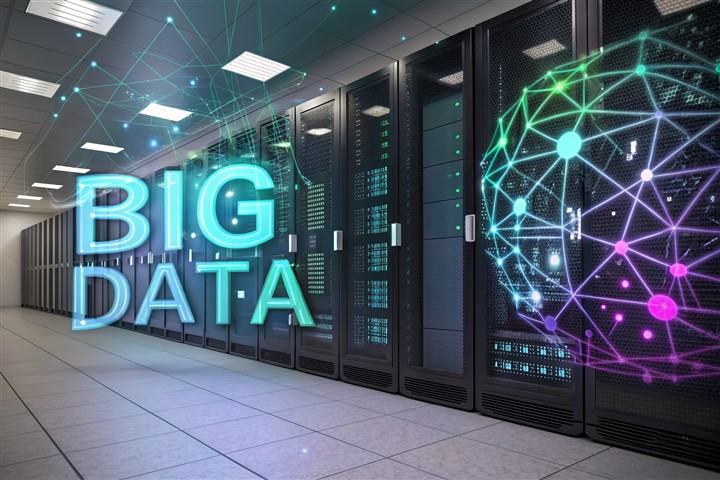
As AI large-model training scales continue to expand, the focus of data center competition is shifting from GPU computing power to network infrastructure. Recently, industry chain players including Corning, NVIDIA, AWS, GlobalFoundries, and 3M have successively released new products, formed industry alliances, or expanded investment, showing that optical interconnect technology is accelerating its evolution into the core layer of AI infrastructure.From connector standardization to silicon photonics, co-packaged optics (CPO), and optical switching, AI data centers are entering a new phase centered on optical networks.
Over the past two years, AI data center development has revolved almost entirely around GPUs.
Whether it is NVIDIA Blackwell, AMD MI400, or various AI accelerator chips, almost all attention is focused on computing capability itself.
However, as GPU counts grow rapidly, a new bottleneck is gradually emerging——network connectivity.
Today, a large AI data center often needs to deploy tens of thousands or even hundreds of thousands of GPUs.During training, large numbers of parameters need to be continuously synchronized between GPUs.What truly limits AI performance is increasingly not the GPU itself, but the data transmission efficiency between GPUs.
The industry generally believes that AI infrastructure has entered a new stage of “Network is the Computer”.Therefore, optical networks have begun to become a new competitive focus of AI data centers.
In traditional enterprise data centers, large numbers of servers are still connected with copper cables.But AI training clusters have completely changed this model.
On the one hand, network bandwidth continues to increase.400G has become the mainstream configuration for AI data centers;800G beginning large-scale deployment;1.6T optical modules are also being industrialized.
On the other hand, the volume of data exchange between GPUs is growing exponentially.Compared with copper cables, fiber has more obvious advantages in the following aspects:
Especially under the trend of AI clusters continuously expanding from cross-rack to cross-machine-room and even cross-campus deployment, fiber has gradually become an irreplaceable connection medium for AI infrastructure.
As AI data centers grow larger and fiber counts increase rapidly, traditional connection methods are exposing more and more problems.
For example:
To solve these problems, more than 40 industry chain companies including 3M jointly established the EBO (Expanded Beam Optical) multi-source agreement (MSA) alliance this year, hoping to create a unified standard for expanded-beam optical connectors.
Compared with traditional physical-contact fiber optic connectors, EBO uses expanded-beam optical design, which is more tolerant of dust contamination and more field-maintenance friendly, making it better suited to high-density deployment environments such as AI data centers.
For data center operators, standardization not only means more reliable connectors, but also the ability to use compatible products from different vendors in the future, reducing procurement and O&M costs and mitigating supply chain risks.
Beyond connectors, the switching network itself is also changing.
Currently, although most data centers use fiber for transmission, switching equipment internally still requires “optical—electrical—optical” conversion.This process not only increases power consumption, but also adds latency.
A recent study demonstrated by the University of Arizona attempts to achieve true all-optical switching (Optical-to-Optical Switching).
In simple terms, it keeps data in optical signal form throughout the switching process, without converting to electrical signals in between.In theory, this can not only significantly reduce network energy consumption, but also further improve data exchange efficiency.
Although the technology still has some way to go before large-scale commercial deployment, the industry generally believes that all-optical switching will become an important development direction for future AI networks.
If optical modules were mainly deployed on switch panels in the past, in the future they will gradually move closer to the chips.In recent years, silicon photonics has become one of the hottest technology directions in the entire AI industry.
Companies including GlobalFoundries, Credo, Sivers, and LightSpeed Photonics are all actively investing in:
These technologies share one common goal:Bringing light as close to computing as possible.
In traditional solutions, the interconnection between GPUs and optical modules still requires relatively long copper interconnects.CPO, in contrast, places optical engines directly next to switching ASICs or even AI chips.
This enables:
Although CPO still needs time before full adoption, the industry has already begun forming a complete ecosystem.From chip vendors and optical module companies to connector, cable, and server manufacturers, the industry is beginning to build new collaborative ecosystems around CPO.
It is worth noting that the development of this round of AI optical networks is reflected not only in technological innovation, but also in industry chain layout.
Recently, Corning reached long-term cooperation agreements with NVIDIA and AWS respectively.Among them, Corning plans to increase its U.S. optical connector manufacturing capacity by more than 10 times and expand fiber production capacity.
At the same time, STL announced plans to invest up to $100 million in the United States to build new optical communications manufacturing capability.These moves send a clear signal:The pace of AI data center development has begun to test the global optical communications supply chain.
In the future, in addition to GPUs, switches, and power transformers, fiber, connectors, optical modules, and silicon photonics chips may all become important resources affecting AI data center construction cycles.
At the same time, the industry chain is placing increasing importance on localized manufacturing and supply chain security to improve delivery capability and reduce potential risks.
Judging from recent industry developments, whether it is the establishment of the EBO standard alliance or the continuous advancement of silicon photonics, CPO, optical switching, and near-packaged optics, all point to the same trend:AI infrastructure is moving entirely toward the optical network era.
Future data center competition is no longer just about GPU performance, but about competition across the entire infrastructure system.
Including:
These technologies, once part of the communications industry, are now becoming important components of AI infrastructure.
Copyright © 2023-2025 APAC Cable (Guangzhou) Co., Ltd. All Rights Reserved 粤ICP备2025482347号-1
Address: No.361, Xintang Avenue West, Xintang Town, Zengcheng District, Guangzhou, China





 粤公网安备44011802001235号