


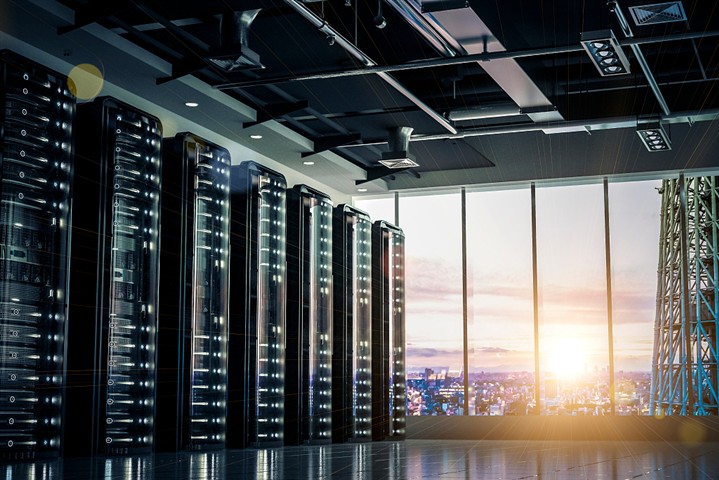
The rapid development of artificial intelligence is driving a new wave of global data center construction, while continued electrification of transportation and industry is pushing global electricity demand into a phase of rapid growth. Yet compared with steadily rising generation capacity, grid infrastructure construction lags noticeably behind, increasingly becoming a key bottleneck constraining the digital economy and energy transition.
Recent practice in the European market shows that the biggest challenge facing data center projects is no longer land or capital, but securing stable, adequate grid connection capacity. Faced with long grid expansion cycles and high investment costs, battery energy storage systems (BESS) are evolving from ancillary equipment for renewables into critical infrastructure that enables data centers, EV charging networks, and renewable energy projects to move forward.
This trend also offers important lessons for China, which faces the same rapid development of computing infrastructure and construction of a new power system.
In recent years, new compute demand represented by generative AI, large model training, and high-performance computing has continued to grow, reshaping the global energy consumption structure.
According to the International Energy Agency (IEA), global electricity demand grew by 4.3% in 2024 — more than double the average growth rate of the past decade — and is expected to maintain an annual growth rate of about 4% in the coming years.
The drivers go beyond the AI industry to include the rapid adoption of new energy vehicles, electrification of industrial production, and large-scale deployment of renewable energy. Combined, these factors have created the largest demand for grid expansion since the electrification wave of the last century.
Compared with data centers of the traditional internet era, next-generation AI data centers place much higher demands on power. CPU-based data centers of the past typically drew only 4~8 kW per rack, and racks exceeding 30 kW were uncommon. Today, GPU-centric AI training servers commonly reach 100~200 kW per rack and increasingly adopt liquid cooling and entirely new power supply and distribution architectures.
More importantly, the scale of AI data center construction has fundamentally changed. Large high-performance computing centers used to be tens of megawatts, but today more than half of the world's planned new AI data centers exceed 200 MW, making them major new load centers on regional grids.
Although Europe has pushed ahead with energy transition in recent years, much of its transmission and distribution network dates to the second half of the twentieth century, when grids served centralized generation and relatively stable industrial loads — never designed for today's scenario of distributed renewables, hyperscale data centers, and tens of millions of electric vehicles connecting at once.
European electricity demand has already returned to growth, and as industrial decarbonization, the AI industry, and the new energy vehicle market expand further, pressure on the grid will keep mounting.
At the same time, the massive construction of renewable projects is adding further strain. Globally, more than 1,650 GW of wind and solar projects are waiting for grid connection, a significant share concentrated in Europe and the UK. Much of this capacity is ready to build but cannot be connected in time due to insufficient transmission capacity.
While data centers and renewable projects can typically be built and commissioned within about a year, a new high-voltage transmission line often takes five to fifteen years from planning and approval to construction. In other words, electricity load is growing far faster than the grid can be built.
Europe has also faced tight supplies of transformers, cables, and power electronics, along with a shortage of skilled construction workers, further lengthening grid upgrade cycles.
For data center developers, obtaining a grid connection allocation has become a decisive factor in whether projects can move forward.
Facing the contradiction between long grid construction cycles and rapidly growing loads, battery energy storage systems (BESS) are becoming an important solution for Europe's energy industry.
Over the past decade or more, lithium-ion battery costs have fallen by over 90%, and global storage capacity has grown rapidly, with new installations exceeding 42 GW in 2023 — roughly two-thirds of them grid-scale projects.
Meanwhile, the EU has introduced policies such as the Renewable Energy Directive (RED III) and the Net-Zero Industry Act, recognizing storage as a key part of the energy transition, streamlining storage project approvals, and encouraging storage to be co-developed with renewable projects.
Whereas transmission lines can take more than a decade to build, large storage projects typically enter service within 6 to 18 months, and customer-side storage projects can be built even faster.
This rapid deployment capability makes storage critical infrastructure that can be built in tandem with AI data centers and renewable projects today.
It is worth noting that storage systems cannot replace power generation, nor can they fundamentally solve grid expansion.
Their true value lies in optimizing the utilization of existing grid resources.
For data centers, deploying customer-side storage allows them to make the most of existing grid capacity — charging gradually during low-load periods and discharging during compute peaks — reducing instantaneous demand and easing the strain on distribution networks.
Storage can also engage in peak-valley price arbitrage, capacity tariff management, and demand response, and in some markets can even feed power back to the grid, improving overall economics.
For grid operators, storage effectively shaves peaks and fills valleys, relieves local network congestion, and buys time for future transmission and distribution upgrades.
Energy storage thus plays more of a "buffer" and "regulator" role than a replacement for the traditional grid.
As AI data centers continue to scale, the design philosophy of their energy systems is changing.
Future data centers must not only focus on server performance and cooling efficiency, but also weigh grid connection capacity, storage configuration, renewable energy utilization, and energy dispatch strategy.
More and more new AI data centers adopt an integrated "PV + storage + data center" design, building campus-level energy management systems (EMS) to achieve intelligent coordination among renewable generation, storage dispatch, load control, and backup power.
This model not only relieves grid pressure but also improves the green, low-carbon operation of data centers.
As digital energy technologies mature, data centers are evolving from traditional large energy consumers into an important component of the new power system.
China is currently in an important phase of advancing its "East Data, West Computing" program, rapid renewable energy development, and the construction of a new power system, making the European experience highly relevant.
On one hand, as AI, large models, and intelligent computing centers develop rapidly, computing infrastructure demands higher power supply reliability and grid capacity. Future data center siting will depend increasingly on regional grid carrying capacity, not just land costs and network resources.
On the other hand, storage will gradually expand from supporting equipment for renewable projects into critical energy infrastructure for data centers, industrial parks, smart campuses, and industrial enterprises — improving energy efficiency and supply reliability through peak shaving, demand response, and backup power.
In addition, intelligent technologies such as building energy management systems (EMS), microgrids, integrated energy management platforms, and digital twin energy systems will play an increasingly important role in the integration of storage with data centers, achieving coordinated optimization of computing infrastructure and energy systems.
The AI era is propelling the world into a new cycle of electrification, while grid construction can no longer keep pace with rapidly growing electricity demand.
For data centers, renewable projects, and EV charging infrastructure, the biggest challenge ahead may no longer be technology itself, but securing stable, reliable, and sustainable power supply.
<p" style="box-sizing: border-box;"><strongThe evolution from "computing centers" to "energy centers", along with the deep integration of the power grid, energy storage, building intelligence, and energy management systems, will become an important direction for smart infrastructure construction in the next phase.< strong="" style="box-sizing: border-box;"></strongThe evolution from "computing centers" to "energy centers", along with the deep integration of the power grid, energy storage, building intelligence, and energy management systems, will become an important direction for smart infrastructure construction in the next phase.<></p">
Against this backdrop, energy storage is becoming an important bridge connecting the digital economy and the new power system. While it cannot replace grid construction, it can effectively ease short-term supply-demand imbalances and buy precious time for renewable energy development, AI infrastructure construction, and the energy transition.
Copyright © 2023-2025 APAC Cable (Guangzhou) Co., Ltd. All Rights Reserved 粤ICP备2025482347号-1
Address: No.361, Xintang Avenue West, Xintang Town, Zengcheng District, Guangzhou, China





 粤公网安备44011802001235号