


In today's digital era, enterprises face unprecedented competitive pressure and market volatility. To stay ahead in intense market competition, they must respond quickly to market changes and make informed decisions. The convergence of Artificial Intelligence (AI) and the Internet of Things (IoT) is redefining the speed and efficiency of business decision-making, helping enterprises rapidly convert data into decisions. This article explores how AI and IoT, through data-driven decision-making, enhance operational efficiency, innovation capability, and market competitiveness, thereby redefining business speed.
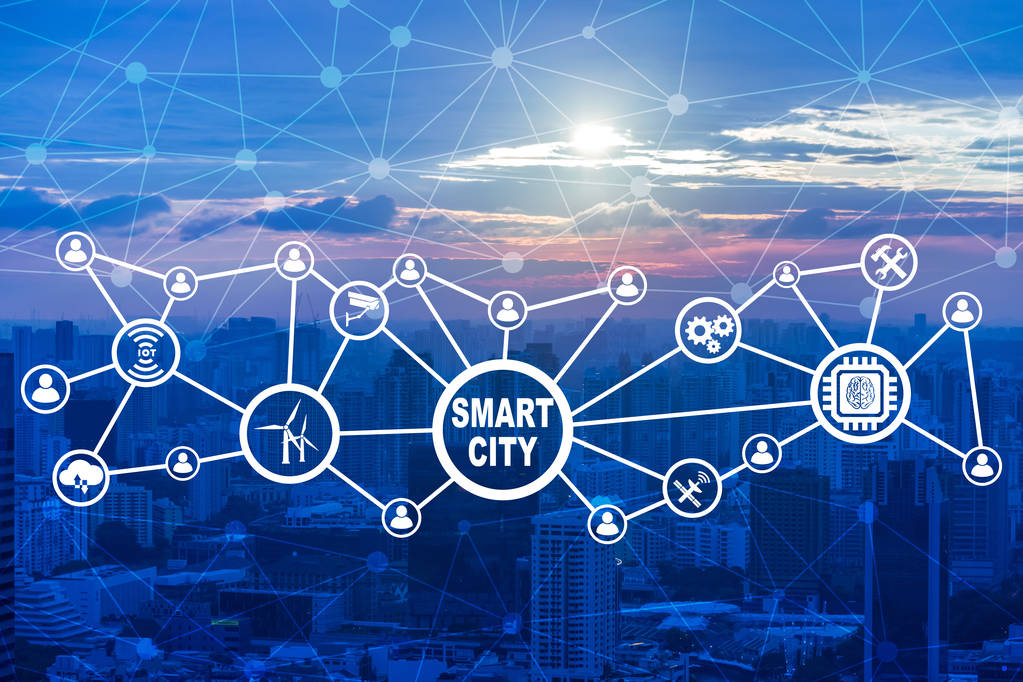
Artificial Intelligence (AI) refers to technologies that enable computer systems to simulate human intelligence, including machine learning, natural language processing, and computer vision. The Internet of Things (IoT), meanwhile, connects various devices and sensors over the Internet to enable data exchange and collaborative work among devices. The convergence of the two provides powerful technical support for data-driven decision-making.
In the modern business environment, data is the core asset for corporate decision-making. By collecting, analyzing, and leveraging data, enterprises can better understand market demand, customer behavior, and operational efficiency, enabling more informed decisions. However, the value of data lies not only in its volume but also in its quality and analytical capability. The combination of AI and IoT technologies helps enterprises extract valuable insights from massive datasets, enabling data-driven decision-making.
IoT devices collect real-time data through sensors and transmit it to the cloud or edge computing platforms. AI algorithms then analyze and process this data to extract valuable information and insights. This synergy not only improves the speed and accuracy of data processing but also enables real-time response to market changes, supporting rapid decision-making.
AI and IoT technologies enable real-time analysis and processing of data. Through machine learning algorithms, enterprises can quickly identify patterns and trends in data, anticipating market shifts and customer needs ahead of time. This real-time data analysis capability allows enterprises to make decisions quickly, adjust strategies promptly, and gain a competitive edge.
AI and IoT technologies can automate business processes. Through intelligent algorithms and Robotic Process Automation (RPA), enterprises can automatically execute repetitive tasks, reducing manual intervention and improving work efficiency. This automation not only enhances operational efficiency but also reduces human error and improves data quality.
In manufacturing and logistics, IoT devices can monitor the operating status of equipment in real time. Using AI algorithms, enterprises can predict equipment failures, schedule maintenance in advance, and reduce downtime. In addition, enterprises can analyze data to optimize resource allocation and improve production efficiency.
With customer data collected through IoT devices, enterprises can better understand customer needs and behavior patterns. AI algorithms can analyze this data to help enterprises optimize products and services and enhance the customer experience. This customer-centric, data-driven approach not only increases customer satisfaction but also strengthens customer loyalty.
In manufacturing, IoT devices can monitor the operating status of production equipment in real time. Using AI algorithms, enterprises can predict equipment failures, schedule maintenance in advance, and reduce downtime. In addition, enterprises can analyze data to optimize production processes and improve productivity. For example, General Electric (GE) has used IoT and AI technologies to achieve predictive maintenance of equipment, reducing downtime and improving production efficiency.
In retail, IoT devices can collect customer behavior data such as shopping paths and dwell time. Using AI algorithms, enterprises can analyze this data to optimize store layouts and product displays, enhancing the customer experience. In addition, enterprises can use data analytics to predict customer demand and optimize inventory management. For example, Walmart has used IoT and AI technologies to achieve real-time inventory monitoring and optimized management, improving operational efficiency.
In healthcare, IoT devices can monitor patients' health conditions in real time. Using AI algorithms, doctors can analyze patient data to predict disease risks early and develop personalized treatment plans. This data-driven healthcare model not only improves medical efficiency but also enhances the patient experience. For example, IBM Watson uses AI to help doctors analyze patient data and provide personalized treatment recommendations.
In financial services, AI and IoT technologies can be used for risk assessment and fraud detection. By analyzing customers' transaction data and behavior patterns, enterprises can identify fraudulent activity in real time and reduce risk. In addition, enterprises can use data analytics to optimize investment portfolios and boost returns. For example, JPMorgan Chase has automated risk assessment and fraud detection with AI, improving operational efficiency.
With the widespread use of IoT devices, data security and privacy protection have become major challenges. Enterprises need to adopt encryption technologies to ensure the security of data transmission and storage, preventing unauthorized access and tampering. In addition, enterprises must comply with relevant laws and regulations to protect customer privacy.
IoT devices come from different vendors, with varying technical standards and interoperability. To address this, the industry needs to develop unified technical standards to ensure compatibility between devices. In addition, enterprises need to build open platforms to facilitate data sharing between devices.
The rapid development of AI and IoT technologies has led to a shortage of skilled talent. Enterprises need to strengthen talent cultivation and recruitment and build professional technical teams. In addition, they can partner with universities and research institutions on industry-academia-research collaboration projects.
As AI and IoT technologies advance, enterprises will become more intelligent and automated. Through intelligent algorithms and Robotic Process Automation (RPA), enterprises can automatically execute complex business processes and improve efficiency. In addition, enterprises can optimize decision-making through data analytics, achieving intelligent management.
The convergence of edge computing and cloud computing will be a major trend going forward. With edge computing, enterprises can preprocess data at the device level, reducing data transfer volumes. With cloud computing, enterprises can centralize data storage and analysis, increasing processing capacity. This convergence not only speeds up data processing but also lowers costs.
With the widespread application of AI and IoT technologies, ethics and sustainable development will receive more attention. Enterprises need to consider ethical issues in their technology applications, ensuring fairness and transparency. In addition, enterprises must achieve sustainable development through technological innovation, reducing their impact on the environment.
The convergence of AI and IoT is redefining business speed. Through real-time data analytics, automated processes, predictive maintenance, and customer experience optimization, enterprises can respond quickly to market changes and make informed decisions. Despite challenges such as data security, technical standards, and talent shortages, AI and IoT will play an even more important role in the future of business through technological innovation and policy support. In the future, as intelligent, automated, and edge computing technologies advance, enterprises will become more efficient and sustainable.
Copyright © 2023-2025 APAC Cable (Guangzhou) Co., Ltd. All Rights Reserved 粤ICP备2025482347号-1
Address: No.361, Xintang Avenue West, Xintang Town, Zengcheng District, Guangzhou, China





 粤公网安备44011802001235号